
SAFe - P.I. Planning [Day 2]
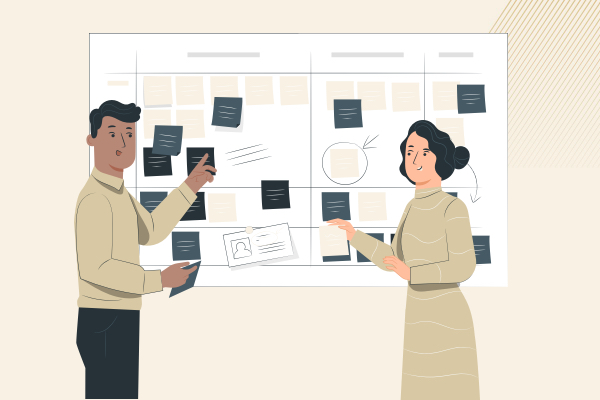
Program Increment (PI) Planning is a cadence-based, face-to-face event that serves as the heartbeat of the Agile Release Train (ART), aligning all the teams on the ART to a shared mission and Vision
Sources :
⤴️ © Scaled Agile, Inc.
1h00
Planning Adjustments
byManangement
The next day, the event begins with management presenting changes to the planning scope, people, and resources
2h00
Team Breakouts
byTeams
Teams continue planning and making the appropriate adjustments. They finalize their objectives for the PI, to which the Business Owners assign business value
2h00
Final Plan Review + Lunch
byTeams
All teams present their plans to the group during this session. At the end of each team’s time slot, the team states its risks and impediments and provides the risks to the RTE for use later in the ROAMing exercise. The team then asks the Business Owners if the plan is acceptable. If the plan is accepted, the team brings their team PI objective sheet to the front of the room so everyone can see the aggregate objectives unfold in real-time. If the Business Owners have concerns, teams can adjust the plan to address the identified issues. The team then presents its revised plan
1h00
ART Risks
byRTE + Teams + Management
During planning, teams have identified risks and impediments that could impact their ability to meet their objectives. These are resolved in a broader management context before the whole train. One by one, the risks are discussed and addressed with honesty and transparency and then grouped into one of the following categories :
-
Resolved – The teams agree that the risk is no longer a concern
-
Owned – Someone on the train owns the risk since it cannot be addressed during PI planning
-
Accepted – Some items are simply facts or potential problems that must be understood and accepted
-
Mitigated – Teams identify a plan to reduce the impact of the risk
-
15'
Confidence Vote
byTeams
Once ART PI Risks have been addressed, teams vote on their confidence in meeting their team PI objectives Each team conducts a vote using their fingers (fist of five) or a digital tool for remote events. If the average is three fingers or above, then management should accept the commitment. If it’s less than three, the team reworks its plan. Anyone voting two fingers or fewer should be allowed to voice their concerns. These concerns might add to the risk list, require replanning, or provide information. Once each team has voted, it’s repeated for the entire ART, with everyone expressing their confidence in the collective plan
Plan Rework?Optional
byTeams
If necessary, teams adjust their objectives until they have high confidence. This additional planning is one occasion where alignment and commitment are valued more highly than adhering to a timebox.
2h00
Planning Retrospective & Moving Forward
byRTE
Finally, the RTE leads a brief retrospective for the PI planning event to capture what went well, what didn’t, and what to do better next time
Next StepsOptional
Next steps – Typically, a discussion about the next steps, along with final instructions to the teams, follows, including:
-
Cleaning up the rooms used for planning (if applicable)
-
Entering the team PI objectives and stories in Agile lifecycle management (ALM) tooling
-
Reviewing team and ART events calendars
-
Determining Iteration Planning and Team Sync locations and timing
-